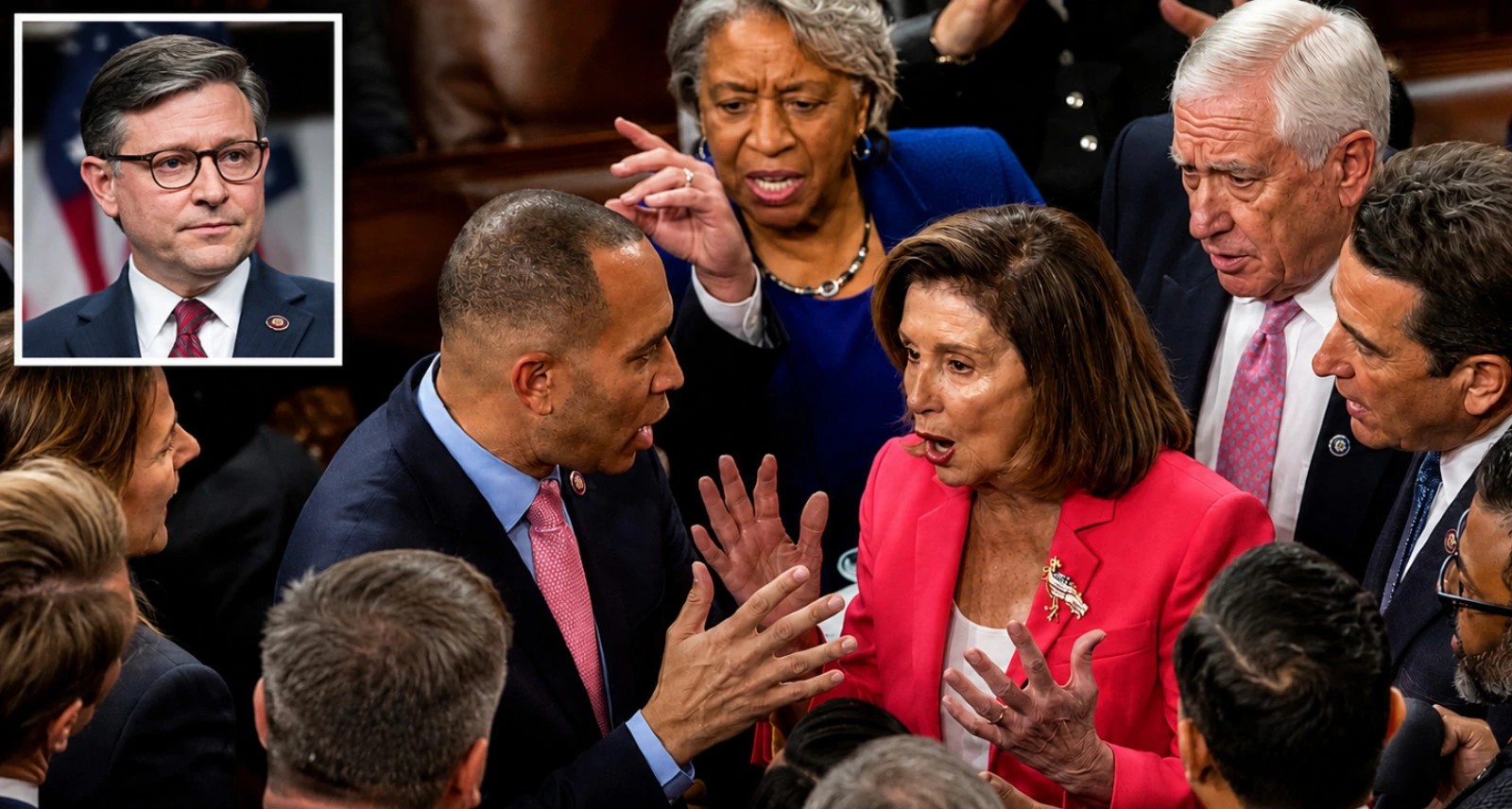
The House voted 237-169 Wednesday to pass legislation that would restrict federal funding for colleges participating in anti-Israel boycotts, with 33 Democrats joining Republicans while Minority Leader Hakeem Jeffries and former Speaker Nancy Pelosi opposed the measure.
H.R. 4795, the Protect Economic and Academic Freedom Act of 2026, amends higher-education law by attaching federal-funding consequences to institutional boycotts targeting Israel. The bill’s passage reflects a deepening divide within the Democratic Party over Israel policy, with a significant number of moderate Democrats willing to break ranks on the issue.
H.R. 4795, the Protect Economic and Academic Freedom Act of 2026, amends higher-education law by attaching federal-funding consequences to institutional boycotts targeting Israel. The bill’s passage reflects a deepening divide within the Democratic Party over Israel policy, with a significant number of moderate Democrats willing to break ranks on the issue.
Thirty-three Democrats voted in favor, while 167 Democrats and two Republicans—Kentucky’s Thomas Massie and Ohio’s Warren Davidson—opposed the legislation. North Carolina Republican Virginia Foxx sponsored the bill, with New Jersey Democrat Josh Gottheimer as its Democratic co-sponsor.
What Happened
The House convened Wednesday for a floor debate that highlighted competing constitutional and policy concerns. Supporters framed the bill as protecting academic institutions from institutional discrimination, arguing it targets commercial boycott practices rather than individual speech or protest rights.
Progressive Democrats mounted a forceful objection to the measure. Michigan Democrat Rashida Tlaib said the legislation amounts to suppression of pro-Palestinian activism, declaring, “This is an attack on free speech and academic freedom” during debate before the final vote. She accused lawmakers of defending Israeli policies through statutory restrictions on campus speech and activism.
New York Democrat Jerry Nadler offered a more measured critique, stating he opposes the Boycott, Divestment, and Sanctions movement but believes its advocates retain constitutional protections for political expression. His position reflected a middle ground some Democrats attempted to navigate—opposing boycott campaigns while defending speakers’ legal rights.
The Reaction
Jeffries’ opposition placed him against a substantial faction of his own caucus, underscoring internal Democratic tensions over Israel funding and campus activism. Former Speaker Pelosi and senior lawmaker James Clyburn also voted no, positioning themselves alongside the party’s progressive wing on this specific measure.
The 33-member Democratic defection stands among the larger cross-party coalitions on Israel-related votes in recent Congressional sessions. The vote split reflects broader shifts in Democratic demographics and generational attitudes toward the Israeli-Palestinian conflict, particularly among younger and progressive voters who increasingly challenge traditional pro-Israel consensus.
Republican leadership, including House Speaker Mike Johnson, framed the vote as part of a broader midterm election strategy centered on contrasting Republican governance with Democratic proposals. Johnson emphasized what he characterized as Republican successes on economy, border security, and law enforcement during a Tuesday CNBC interview.
What This Means
The bill’s passage signals continued legislative focus on Israel-related campus policies ahead of the midterm elections. The Democratic Party’s visible fracture on the measure suggests Israel policy will remain a fault line in internal party debates, particularly regarding institutional responses to boycott campaigns and the balance between institutional policy and individual expression rights.
The legislation now moves toward Senate consideration, where its prospects depend on that chamber’s appetite for contentious social and foreign policy matters. The vote revealed how Israel-related legislation can mobilize cross-party coalitions while simultaneously exposing partisan and ideological divisions within both parties—with implications for how Congress may approach similar institutional and expression-related disputes in coming sessions.