Texas Governor-elect Gina Hinojosa has not committed to preserving Operation Lone Star, the massive border-security program championed by Republican Gov. Greg Abbott, after defeating him on Tuesday.
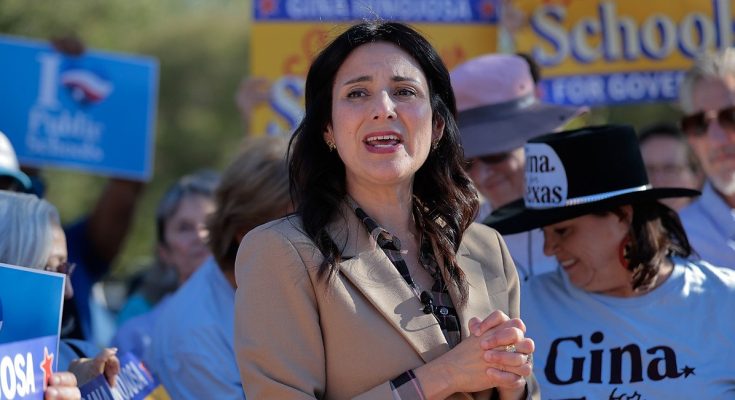
Hinojosa, a Democratic state representative from Austin, unseated the three-term incumbent and will become Texas’ first Democratic governor since Ann Richards. Her victory immediately raises questions about the future of Abbott’s signature border initiative, which has made Texas a leading state partner in immigration enforcement.
Cost and reach of the program
Operation Lone Star has cost Texas more than $11 billion since Abbott launched it in 2021, during the administration of former President Joe Biden. The state has built sections of its own border barrier and deployed more than 10,000 National Guard members through the effort.
Hinojosa has repeatedly criticized Abbott’s handling of the program and voted against its initial funding. She has not, however, promised to eliminate it.
“As governor, I’ll put in the work to secure the border, not waste working Texans’ money on political theater,” Hinojosa said.
In a separate recent interview, Hinojosa declined to name specific border-security spending she would cut once in office. Instead, she argued that billions had been spent prosecuting migrants for trespassing while taxpayers also paid for their legal representation.
“Public safety shouldn’t be a political stunt,” Hinojosa said while discussing her approach to the border. “I will spend the money it takes to keep our community safe, not for political theater.”
Those comments leave open the possibility that parts of Operation Lone Star could survive under Hinojosa while others are dismantled or redirected.
Where she draws the line
Hinojosa has been especially clear in opposing additional border-wall construction in the Big Bend region, which she argues is unnecessary there. She has also sharply criticized Immigration and Customs Enforcement and Texas’ cooperation with certain federal immigration operations.
She previously accused Abbott of turning Texas into a “staging ground” for federal enforcement operations that, in her view, harmed families and benefited political donors.
At the same time, Hinojosa has acknowledged that immigration policies under the Trump administration have substantially reduced illegal crossings, according to NewsNation. She has specifically praised President Donald Trump for policies that contributed to the decline. That position is more nuanced than her criticism of Abbott alone would suggest.
Changing conditions at the border
Illegal crossings have fallen substantially under Trump, easing the pressure Texas faced during the Biden administration, when encounters repeatedly reached record levels. That shift could give Hinojosa more room to decide how much of Operation Lone Star remains necessary.
Hinojosa has argued that cooperation with Mexico and federal authorities can produce better results than some of Abbott’s state-directed enforcement efforts. She cited an earlier episode involving an international bridge closure, in which she contacted the Biden administration and federal officials subsequently negotiated with Mexico.
Her victory could nonetheless change Texas’ relationship with the Trump administration on immigration enforcement in significant ways.
Abbott’s legacy on the border
Abbott became one of the nation’s most aggressive Republican governors on border security during Biden’s presidency. His administration deployed state personnel, installed razor wire, constructed border barriers and transported migrants to Democratic-led cities across the country.
Hinojosa’s election could mean Texas is less willing to provide the same level of state assistance for federal immigration enforcement. That matters because Texas shares approximately 1,250 miles of international border with Mexico, more than any other state.
Hinojosa won despite Abbott dramatically outspending her during the campaign. She ran heavily on affordability, public education and opposition to what she characterized as excessive corporate influence in state government.
Budget priorities and political limits
Hinojosa has proposed using Texas’ large budget reserves to fund one-time $1,500 payments to households, and she is also pushing for Medicaid expansion.
Immigration, however, could produce some of her earliest and most consequential decisions after taking office. Republicans retain control of the Texas Senate, which could limit parts of her legislative agenda and force negotiations over future border appropriations.
Operation Lone Star’s future will ultimately depend on those budget battles and on the executive decisions Hinojosa makes after succeeding Abbott in January.