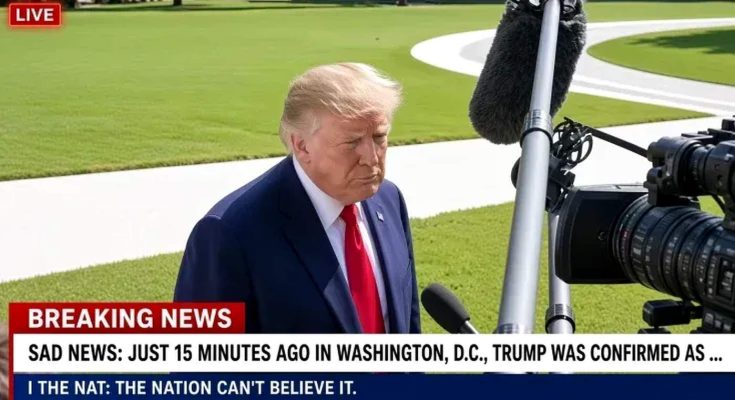
President Donald J. Trump held a crowded Washington, D.C., auditorium in silence on Thursday afternoon, pausing for an extended stretch during a high-profile address in place of the combative rhetoric audiences have come to expect. The unexpected moment quickly drew national attention in a city where political messaging is typically relentless and immediate.
Lawmakers, foreign dignitaries, and members of the national press had gathered anticipating a standard speech. Instead, the President stepped to the lectern and stopped. For several long seconds, he said nothing, scanning the room in silence. Witnesses described a noticeable change in the atmosphere as the room’s usual murmur gave way to a hush, broken only by the sound of camera shutters.
A Pause That Commanded Attention
The silence drew every camera and attendee’s focus to the podium. In Washington, where public figures rarely give up airtime, the break in the expected rhythm of the event stood out. Within minutes of the address ending, short clips of the pause were circulating widely on social media platforms, turning the brief interval into a viral moment.
Divided Reactions
Political analysts across the spectrum moved quickly to interpret the decision. Critics dismissed the pause as a theatrical stunt. Supporters described it as a deliberate communication strategy that sidestepped opposition talking points and left opponents and media outlets reacting on unfamiliar terms.
Whatever the intent, the move highlighted how far a single well-timed silence can travel in an environment built on constant commentary. By declining to fill the moment with words, the President shifted the focus from what was said to the act of not saying anything at all.
Broader Implications
The reaction has continued to ripple through federal institutions and digital media networks. As political communicators assess how to respond, the episode points to a broader trend: unconventional tactics are increasingly shaping the terms of modern political debate, and in some cases, the absence of a message can prove as powerful as the message itself.