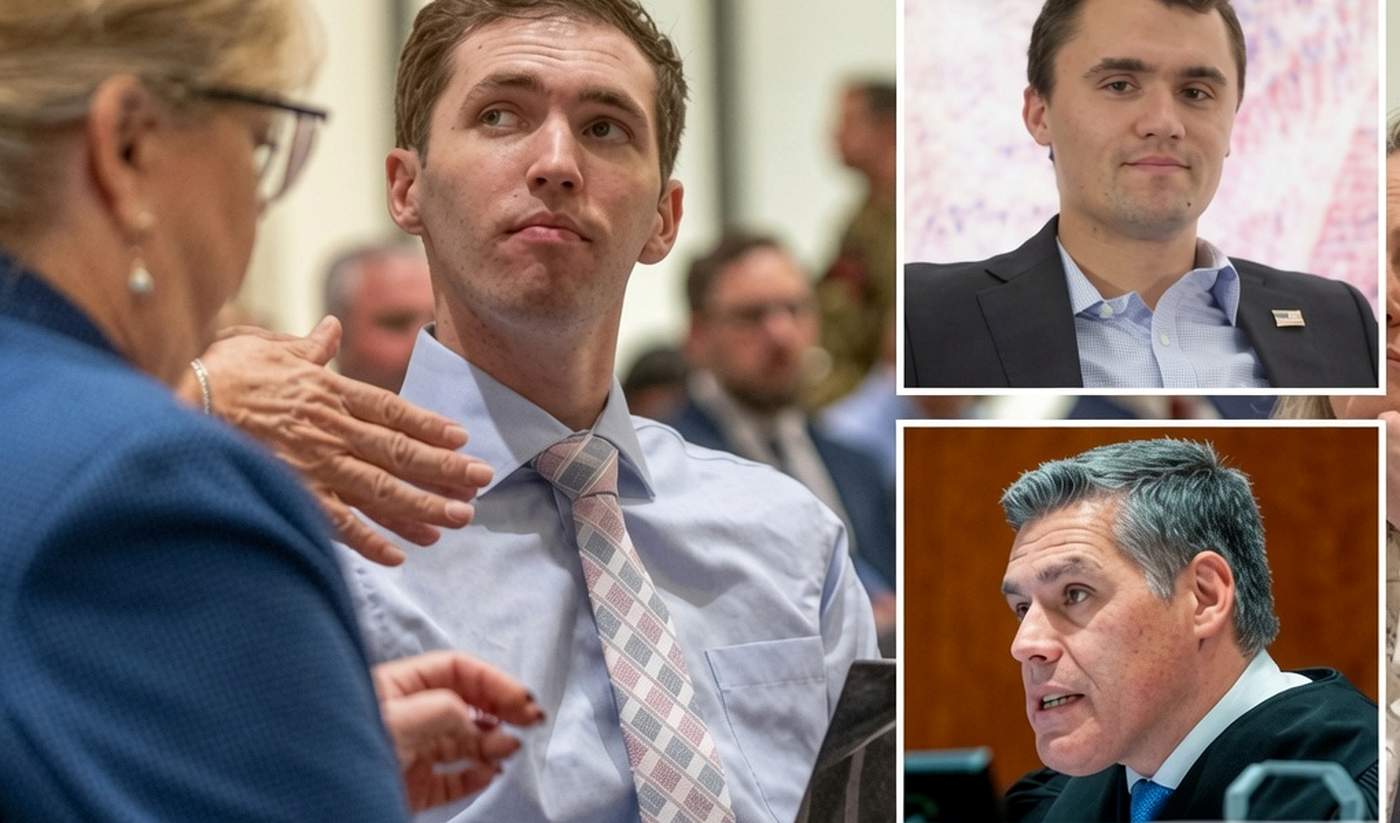
A Utah judge ruled Friday that Tyler Robinson, accused of killing conservative activist Charlie Kirk, remains eligible for the death penalty if convicted of aggravated murder. Judge Tony Graf Jr. also found that Deputy Utah County Attorney Christopher Ballard was in civil contempt of a court order over comments he made about how strong he believed the evidence was against Robinson. The judge rejected the defense’s request to strip the death penalty as the remedy, opting instead to widen the jury selection process to protect a fair trial.
Prosecutors had argued that they stayed within the gag order and other court rules when they “set the record straight” after what they described as a misleading defense filing. That filing triggered viral coverage suggesting the ATF could not link the bullet that killed Kirk to the suspected murder weapon, a rifle belonging to Robinson’s grandfather. According to court records, the ATF classified its toolmark analysis as inconclusive and said it could not determine whether a bullet fragment recovered from Kirk came from that rifle.
Prosecutors pointed out that the bullet’s caliber matched the rifle and that a spent casing found at the scene was a match. They maintained that neither the gag order nor state court rules barred them from correcting what they viewed as a distorted account in the defense’s court papers. Graf agreed that the prosecution’s correction of the ballistic evidence was not improper. He found, however, that Ballard crossed a line in at least one interview by expressing confidence in the overall weight of the evidence against Robinson. In making those remarks, Graf said, Ballard improperly offered an opinion on guilt, and that conduct formed the basis for the contempt finding.
Robinson to appear by video from jail
The dispute has escalated into a broader war of words. Prosecutors accuse the defense of releasing misleading information through court filings, while the defense accuses prosecutors of “hubris” in a series of media interviews it says violated the gag order. Robinson will appear by video from jail.
He has not entered a plea and will not be asked to do so until after his preliminary hearing, which is scheduled to run over a week in early July.
The case has seen several recent developments. Lance Twiggs, 22, a former roommate of Robinson, was granted limited immunity for statements he gave prosecutors during an April interview. Twiggs could become a central witness at the multi-day preliminary hearing next month. According to court filings, he met with prosecutors on April 20 and took part in a recorded interview about Robinson.
Portions of that interview could be presented to Graf during the July hearing. In filings submitted Tuesday, prosecutors said they may also introduce messages exchanged between Twiggs and Robinson. Twiggs is expected to receive limited use immunity for his recorded statement, which generally means the interview itself cannot be used against him in future criminal proceedings.
Witness immunity and new allegations
According to prosecutors, Twiggs repeated during his April 20 interview statements he had previously given investigators after Kirk’s killing in September. He told authorities that Robinson admitted to carrying out the shooting, said Robinson concealed the firearm afterward, disposed of clothing connected to the incident, and instructed Twiggs not to talk to law enforcement.
Robinson has been charged in the case, and The Post noted that prosecutors have not yet tested these allegations in court.
Prosecutors disclosed these details while opposing a defense request to compel Twiggs to testify at the preliminary hearing. They argued his appearance was unnecessary because investigators already have his recorded statements and screenshots of text messages exchanged between him and Robinson.
Last week, Robinson’s defense suffered another setback. Graf denied a motion to pause the case until the defense’s appeal of an earlier ruling is resolved. That earlier ruling rejected the defense’s effort to bar cameras from the courtroom.