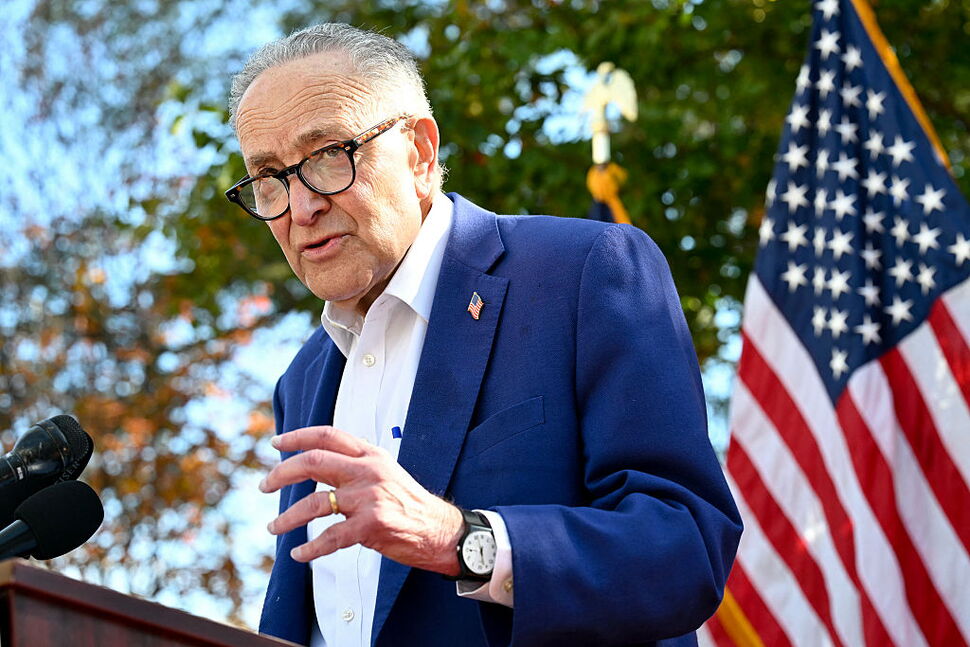
Even after a banner midterm election for their party, some Senate Democrats are weighing a leadership shakeup that could cost longtime leader Chuck Schumer his post.
Schumer has led Senate Democrats since 2017. Despite victories by younger, progressive candidates who campaigned in part against the party’s establishment, the senior senator from New York insists his caucus is united behind him.
“I’m confident I will be elected majority leader,” he told reporters at a Nov. 10 news conference. “We have great unity in our caucus, and I will be proud to lead it as majority leader.”
Many analysts expect Schumer to keep his job, but the discontent is genuine. He has long faced criticism from opponents of his support for Israel and of how he has handled President Donald Trump and congressional Republicans.
The caucus vote may not produce a new leader for the upper chamber. It is nearly certain, however, to expose the internal rifts Democrats will carry into the next Congress.
Who Wants Schumer Out?
Sen. Bernie Sanders, the Vermont independent and self-described democratic socialist, said Tuesday that he will vote against Schumer in the upcoming leadership election.
Sanders and Schumer have known each other for more than three decades. Both were born in Brooklyn and attended the same high school. Still, Sanders argued at Tuesday’s news conference that the midterms were a mandate for change, and that Democrats must “move in a new and bold direction.” He called for an open caucus and a “vigorous debate” about the party’s future.
Sen. Elissa Slotkin, a Michigan Democrat, stood alongside Sanders and voiced agreement, though she said she is not seeking the leadership post herself. Slotkin said she will oppose any candidate who does not present a concrete plan and clear ideas for the first 100 days.
“I am not actively seeking this job. I am seeking change,” she said.
Why the Push After a Win?
Schumer’s supporters credit him with a major share of the party’s decisive midterm performance.
Democrats hold narrow leads in two Senate races still being decided, in Alaska and Mississippi. Their candidates there, Mary Peltola in Alaska and Scott Colom in Mississippi, were recruited by Schumer. If both win, Democrats will hold a 56-44 Senate majority, their largest since the 2008 election.
“When the manager takes you to the World Series, you give him another contract,” Sen. Ruben Gallego of Arizona said Tuesday at a joint news conference with Schumer.
Critics, however, attribute the midterm gains to a backlash against Trump and economic anxiety, not to Schumer’s cautious approach to Senate leadership. Frustration with him intensified last year during an early standoff with the Trump administration. Schumer backed a Republican-authored funding bill, which ultimately passed, to prevent a government shutdown. Several prominent congressional Democrats publicly criticized him and questioned his leadership.
Sanders and other critics argue that Schumer cannot deliver the sweeping change voters appeared to demand at the polls. They point to growing unrest within the party over the war in Iran, the cost of living, and what they see as weak opposition to congressional Republicans.
Many of these critics view Schumer as part of an older generation that has run the caucus for decades. With a wave of young freshmen set to be sworn in, some, Sanders among them, worry he will struggle to represent a diverse caucus in full.
Who Could Replace Him, and Would Anything Change?
The leading contender is Sen. Chris Van Hollen, a Maryland Democrat who has held public office since 1991. At 67, Van Hollen is younger than Schumer, who is 75, but he is hardly a product of the new generation.
In recent years, however, Van Hollen has emerged as a prominent critic of the Democratic establishment and its handling of Trump. He has not committed to seeking a leadership role, but supporters see him as a bridge between the party’s establishment and progressive wings.
Many incoming senators have not committed to the current leadership. Sen.-elect Peggy Flanagan, the first Native American woman to serve in the Senate, has called for new leadership and said she will not back Schumer.
“I have been very impressed by Sen. Van Hollen’s leadership,” Flanagan said.
Sen.-elect Abdul El-Sayed, the progressive who won the Michigan seat, has also said he will not support Schumer. He told CNN that Van Hollen would make “an amazing Senate majority leader.”
Slotkin said she met with Van Hollen this week. Van Hollen says he is committed to consulting his colleagues before making any decisions.
“I am listening to all the people from around the country that were calling for big change,” Van Hollen said Tuesday at the Popular Mandate national conference, according to Semafor reporter David Weigel. “I am in the process right now of calling my colleagues.”
Could the Effort Succeed?
For now, Schumer has little choice but to wait.
Senate Democrats’ caucus rules say leadership elections, which are held behind closed doors, cannot take place before December. The vote is currently scheduled for Dec. 1, about a month before new senators are sworn in on Jan. 3. Sen. Dick Durbin, the outgoing Democratic whip and the Senate’s second-ranking Democrat, will preside. The vote will be conducted by secret ballot.
A simple majority of the caucus will decide the winner, not a majority of the full Senate. Incoming Democratic senators may attend and vote alongside returning members, while outgoing senators do not. That gives the freshmen an immediate and direct say in the outcome.
The internal fight is unfolding as a Dec. 11 deadline to fund the government approaches. Democrats will need to guard against outside pressure to make the war in Iran the centerpiece of a policy fight, or to settle for a stopgap continuing resolution.