President Donald Trump’s campaign to remove Democratic Rep. Ilhan Omar from Congress could spark an unprecedented constitutional fight over citizenship and the qualifications required to serve in the House.
Trump Calls for Omar’s Removal
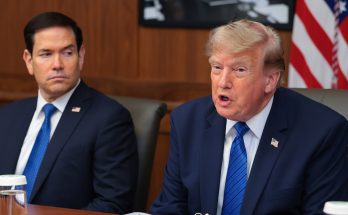
Trump said Monday, during an appearance in Mississippi, “Let’s get her the Hell out of there.” He has repeatedly demanded that Omar leave Congress, pointing to long-running allegations about her immigration history and her previous marriage to Ahmed Nur Said Elmi.
The president has no authority to remove a member of Congress on his own. Any effort to oust Omar would therefore depend on constitutional procedures and could ultimately be decided by federal courts.
The Federal Citizenship Investigation
The push follows a federal investigation into whether Omar improperly obtained U.S. citizenship through immigration paperwork connected to her late father.
Omar has repeatedly denied any immigration fraud. Federal authorities have not charged her, and they have not established that she obtained citizenship unlawfully.
On Oct. 12, Homeland Security Investigations agents searched Omar’s residence in Washington, D.C., after the Justice Department obtained a court-authorized search warrant. Agents reportedly seized her cellphone, computers, notebooks and passport as investigators continued reviewing her immigration and naturalization history.
Investigators have also subpoenaed relatives and examined immigration records as part of an inquiry into whether her citizenship could be revoked.
Omar has denied allegations that Elmi is her brother and that her marriage to him involved immigration fraud. Those allegations remain unproven.
Constitutional Questions Over Seating and Expulsion
The Constitution sets three qualifications for House members: they must be at least 25 years old, have been citizens for seven years, and be inhabitants of the states they represent when elected.
That citizenship requirement could become decisive if federal authorities obtain a court judgment revoking Omar’s naturalization. Omar was born in Somalia, arrived in the United States as a refugee and became a naturalized American citizen in 2000.
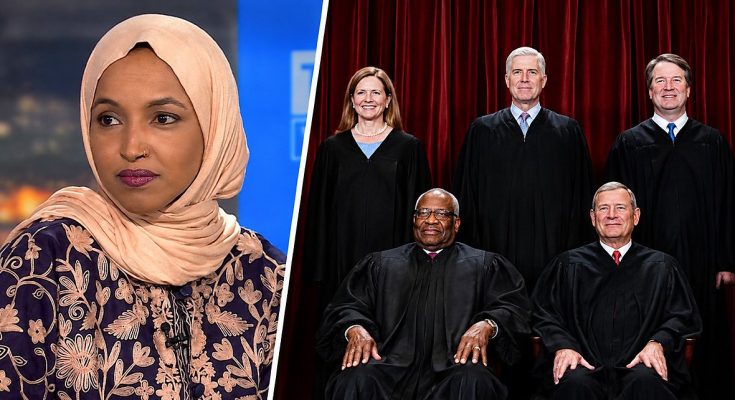
Legal experts say the dispute could raise questions the Supreme Court did not fully resolve in its landmark 1969 decision in Powell v. McCormack. That case involved Democratic Rep. Adam Clayton Powell Jr., whom the House refused to seat after allegations involving congressional funds and payroll practices. The Supreme Court ruled that Congress could not exclude a duly elected member who met the qualifications explicitly set out in the Constitution.
Former Deputy Assistant Attorney General John Yoo has argued that the ruling could actually support congressional action if Omar were legally determined not to be a citizen.
“Powell essentially means that Congress cannot add on to the minimum qualifications set out in the Constitution,” Yoo told Fox News Digital.
Yoo argued that because citizenship is itself one of those constitutional qualifications, Congress could enforce it if Omar were ultimately found not to meet the requirement.
Constitutional scholar Cully Stimson has similarly stressed the difference between refusing to seat someone who lacks constitutional qualifications and expelling a sitting member for misconduct.
That distinction could become especially important if Omar wins reelection on Tuesday and the citizenship investigation is still unresolved when the new Congress convenes. In that scenario, House Republicans could challenge whether she is qualified to be seated, provided authorities first produce evidence undermining her citizenship status.
Any such effort would almost certainly lead to litigation over the evidence, the procedures and the constitutional authority available to Congress.
Expulsion as an Alternative
The other path would be to seat Omar and then pursue expulsion, which requires a two-thirds vote of the House under Article I of the Constitution.
Republican Florida Rep. Randy Fine has already said he would seek Omar’s expulsion if federal investigators establish immigration fraud or citizenship problems.
“I absolutely will demand expulsion immediately,” Fine said when asked what he would do if Omar were determined not to be a citizen.
Expulsion raises a separate constitutional question. The Supreme Court has never directly decided a case governing Congress’ power to expel a member, though the Constitution expressly gives each chamber authority to expel its own members with a two-thirds vote.
The 2023 expulsion of former Republican Rep. George Santos could also become relevant, because some of the misconduct Congress examined predated his election. Stimson said lawmakers could argue that immigration-related misrepresentations continued after Omar entered Congress, drawing parallels to arguments raised during the Santos proceedings.
A Separate Probe Into Financial Disclosures
Omar also faces a separate investigation involving her financial disclosures and businesses associated with her husband, Timothy Mynett.